
What is the Difference Between a Flat and an Apartment? (The Complete Guide)
Are you thinking about buying or renting a house, but you’re not sure about real estate terminology? You’re not the only one. Property portals and brokers frequently confuse the terms “flat” with “Apartment”, although they differ in terms of design, standard of living, facilities, and legal definitions. Knowing the difference between a flat and an apartment saves costly mistakes, gives clarity about the exact cost of maintenance, and ensures a suitable choice according to lifestyle.
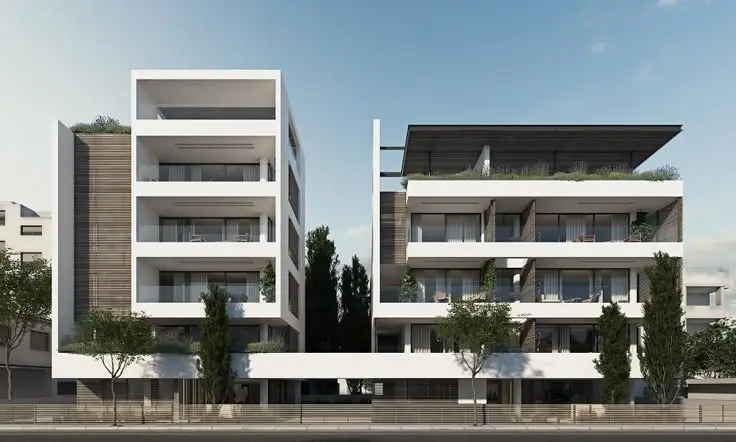
The main difference between a flat and an apartment lies in geographic location, building type, and services. A flat is used in the UK to mean a living space that is on one level, while an apartment refers to a flat in American English located in a multi-storey block of centrally managed flats providing amenities such as security and maintenance services.
Flat vs Apartment: The Core Definition
To make the right property investment, you must first understand how each term originated and how real estate markets classify them today.
+————————————————————————-+
| FLAT vs APARTMENT SPECTRUM |
| [ FLAT / BUILDER FLOOR ] | MODERN APARTMENT ] |
| • Single-level living | • Multi-story community |
| • Standalone / converted building | • Purpose-built complex |
| • Lower maintenance overhead | • Premium shared amenities|
| • Private / independent access | • 24/7 Gated security |
+————————————————————————-+
What is a Flat?
An apartment is a housing unit that occupies one complete floor of the building, which is smaller in size than a residential structure. The term was derived from the Old English term “flett, which meant a level or a house.
In terms of conventional architecture:
- Flats are made by transforming older large private residences into a number of individual apartment units.
- Apartments have straight layouts that comprise all important rooms on one floor.
- In the contemporary Asian and European understanding, the term “flat” also includes low-rise or self-contained units which lack a lot of amenities.
What is an Apartment?
An apartment is a private housing unit that is individually occupied by private residents in a large, purpose-built structure composed of two or more such units. In multiunit architecture, the unit is often called an appartement in French (appartement) and an appartamento in Italian, meaning a separate or enclosed room, in fact, separated from others.
In terms of real estate:
- In real estate today, it refers to a building of up to several hundred apartments located within a unique gated community.
- The building is developed with an aim to accommodate people in different apartments who will have access to the same essential services.
- Apartments are furnished and provided with all necessary facilities for living a good life.
Difference Between Flat and Apartment: Comprehensive Comparison Table
Here is the direct, head-to-head comparison between a flat and an apartment across all primary real estate metrics:
| Comparison Metric | Flat (Builder Floor / Low-Rise) | Apartment (High-Rise / Society Complex) |
| Primary Meaning | Single-level living unit, often low-rise or converted structure. | Multi-unit residence within a planned residential complex. |
| Language Origin | British English (UK, India, Commonwealth). | American English (US, Canada, Global Commercial). |
| Amenities | Basic (parking, independent water/power). | Premium (clubhouse, pool, gym, parks, sports courts). |
| Building Structure | Low-rise (Ground to 4 floors typically). | Mid-rise to High-rise (5 to 40+ floors). |
| Maintenance Cost | Low; negotiated directly among a few owners. | Higher monthly Society Maintenance / CAM charges. |
| Security Setup | Individual lock/gate or independent CCTV. | Multi-tier 24/7 security, guards, and RFID gates. |
| Privacy Level | High (fewer neighbors per floor/building). | Moderate (shared corridors, lifts, and common areas). |
| Customization | Higher flexibility to modify internal structures. | Strict Society / RWA rules on structural modifications. |
| Management | Direct landlord or informal floor-owner group. | Registered Resident Welfare Association (RWA) / Facility Manager. |
Difference Between Flat and Apartment in India
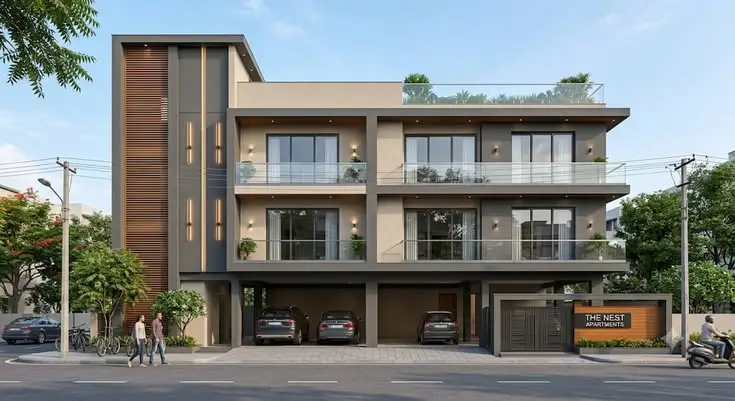
When participating in the Indian real estate sector, comprehending the difference between a flat and an apartment in India can result in various legal and practical consequences.
The real estate market in India consists of two major types of residential properties: Independent Builder Floors (often termed as Flats) and Gated Community Units (Multi-Storeyed Apartments).
1. Independent Flats (Builder Floors)
An independent flat in India is commonly constructed on an independent plot of land (ranging from 200 to 500 Square yards), with builders constructing Ground+3 or Ground+4 floors.
- Ownership of land: Ownership claims have been given to flat owners in the form of an undivided share of land (UDS).
- Privacy: You will find yourself sharing the space only with 3–4 other families, and therefore your lobby will not be crowded.
- Lower set overhead: You need not bear high monthly maintenance charges for swimming pools and clubhouses that you will not use.
2. High-Rise Society Apartments
Modern Indian townships comprise numerous high-rise buildings spread across large land parcels.
- Gated Security: Use of multi-layered security systems like boom barriers, visitor apps, and intercoms.
- Integrated Lifestyle: Presence of grocery stores, sports courts, walking tracks, and power backup.
- RERA Protection: Big apartment projects comply with the Real Estate (Regulation and Development) Act (RERA) by offering standard definitions of carpet areas and delivery timelines.
Real estate consultants like HRrealtech suggest inthat India, the choice between flat vs apartment depends on what one values more: land ownership/privacy (independent flat) or security/amenities (society apartment).
Deep-Dive: 6 Key Distinctions Between Flat and Apartment
Evaluating the difference between flat vs apartment dynamics requires looking at day-to-day living, financial outflow, and long-term resale returns.
Key Factors Driving Your Choice:
├── 1. Architectural Design & Layout
├── 2. Amenities & Shared Lifestyle
├── 3. Legal Ownership & RERA Compliance
├── 4. Maintenance Charges & RWA Rules
├── 5. Privacy vs Community Living
└── 6. Resale Value & Rental Yield
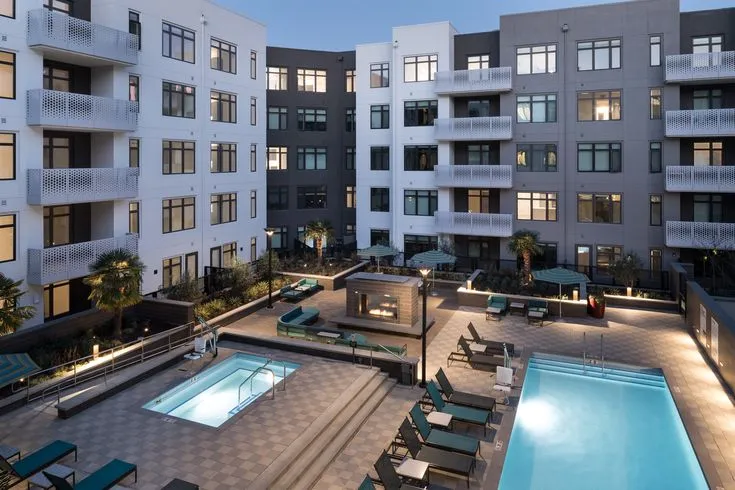
1. Architectural Design and Layout
A flat has kept its name as it is styled in a straight horizontal manner on a single level. A flat will almost never be seen in terms of duplex designs or structures that are multiple storeys high.
An apartment offers a variety of architectural structures from which one can opt for either a studio flat or a 2BHK/3BHK unit, or may buy a multi-storeyed duplex or a penthouse unit.
2. Amenities and Shared Lifestyle
Amenities represent the most noticeable daily difference:
- Flats: Provide essential functionality. You get dedicated parking, an elevator, and independent water tanks, but no leisure infrastructure.
- Apartments: Provide an ecosystem. You get swimming pools, co-working lounges, children’s play zones, and power backup systems capable of running heavy appliances during outages.
3. Ownership and Legal Documentation
Legal clarity differs significantly between standalone flats and society apartments:
- Flats: Require careful verification of the title deed, local municipal building approvals (e.g., floor-wise sanction plans), and specific terrace or parking allocation agreements.
- Apartments: Come with standardized builder-buyer agreements, collective occupation certificates (OC), and transparent RERA registration numbers that make home loan approvals faster across leading banks.
4. Maintenance Costs and RWA Control
Understanding the financial outflow prevents surprises after moving in:
- Flats: Low fixed monthly costs. Maintenance is informal and handled collectively when repairs arise.
- Apartments: Mandatory Common Area Maintenance (CAM) charges. You pay a fixed rate per square foot every month, regardless of whether you use the amenities.
5. Privacy vs. Community Living
Your social preferences dictate the ideal environment:
- Flats: Offer isolated, quiet living with minimal interference from neighbors.
- Apartments: Offer an active community experience with festival celebrations, sports leagues, and safe social spaces for children and senior citizens.
6. Resale Value and Rental Yield
Both asset classes perform well, but cater to different tenant and buyer pools:
- Flats: Flats grow in value faster than buildings in capital-starved urban areas because of the higher UDS.
- Apartments: generate better income from renting units to business clients and families or foreign expats in need of round-the-clock security and ready-made amenities.
Both types of investment are successful but for different types of renters and investors: Apartment buildings.
Related Housing Types: Condos, Lofts, and Penthouses
When comparing flats vs apartments, there are additional classifications within real estate that one should note.
- Condominium: A type of building that resembles apartments, but employs a different ownership model. In a condo, you’re the sole owner of your specific unit and co-owner of the common parts with other unit owners via the condo board.
- Loft: An apartment that has been developed from a former factory/warehouse and is fully equipped with high ceilings, open spaces, and exposed bricks.
- Studio Apartment: A compact single-room apartment serving as a bedroom, living room, and kitchen with a separate bathroom.
- Penthouse: A luxurious apartment situated on the roof of the building, providing an elegant interior, private elevator, and beautiful city view.
Flat vs Apartment: Which One Should You Buy or Rent?

Consider utilizing the following operating checklist to make your decision:
YOUR DECISION CHECKLIST:
Pick a FLAT if:
[✔] You want to pay less in monthly maintenance costs.
[✔] You want a lot of privacy with few immediate neighbors.
[✔] You want a higher proportion of undivided land in prime urban areas.
[✔] You prefer dealing with a private owner/builder.
Pick an APARTMENT if:
[✔] You need 24 hours of protection, CCTV surveillance, and gated access.
[✔] You want to enjoy benefits like gyms, swimming pools, and parks.
[✔] You want 100% power backup and work-from-home capabilities.
[✔] You need a community for kids and seniors.
Why Expert Real Estate Consultation Matters (Featuring HRrealtech)
When navigating the difference between a flat and an apartment in India, one needs to understand certain aspects such as law firm proficiency, title check-up, real estate valuation, etc.
Industry specialists like HRrealtech assist property buyers in figuring out their property prospects depending on verified carpet area, past projects of the builder, RERA rules compliance, and appreciation of property value over time. Whether you are searching for a builder floor flat or a posh apartment in a society, having the support of professional real estate agents guarantees your investments are made in legally safe properties.
Frequently Asked Questions (FAQs)
Principally, a flat means a single-level dwelling that may be located in an independent building or a low-rise one, while an apartment means a unit in a multi-storey complex designed specifically for this purpose and has common facilities that are managed centrally.
Indeed. Flats are cheaper to buy and maintain compared to apartment units in apartment societies since they do not offer recreational facilities like swimming pools and clubs.
In India, the term flat typically means that the independent builder floor has been built on private land and consists of only 3 to 4 units in total. The phrase apartment, on the other hand, applies to flats built within large gated societies where there are high-rise buildings, security systems, and shared facilities.
Both flat and apartment investments are rational. Builder floor flats are known to show increased land value in the center of the cities, while society apartments generate higher rental income and attract a larger audience of corporate tenants due to the additional security and various facilities provided.
Yes. Apartments that have several levels are called duplexes or penthouses; flats are defined by multiple units but on one level.
The Final Verdict
Three factors set the flat apart from the apartment: the location, lifestyle amenities, and maintenance cost. If you seek out independence, a bigger land area, and no maintenance fees, the flat would suit you best. On the other hand, if your choice is a modern, convenient, and advanced lifestyle for your family members, then investing in an apartment in a gated community would be the right option.
Determine the budget, write down the lifestyle priorities that cannot be changed, consult property experts such as HRrealtech, and choose what fits best with your long-term plans.